
How to Send a California 20-day Preliminary Notice: Complete Guide
by Krista Lerma

Quick Summary: How to Send a California 20-Day Preliminary Notice
A California 20-Day Preliminary Notice is a legal document that subcontractors, suppliers, and equipment lessors must serve within 20 days of first furnishing labor or materials to preserve their right to file a mechanics lien. Without it, you forfeit your lien rights entirely.
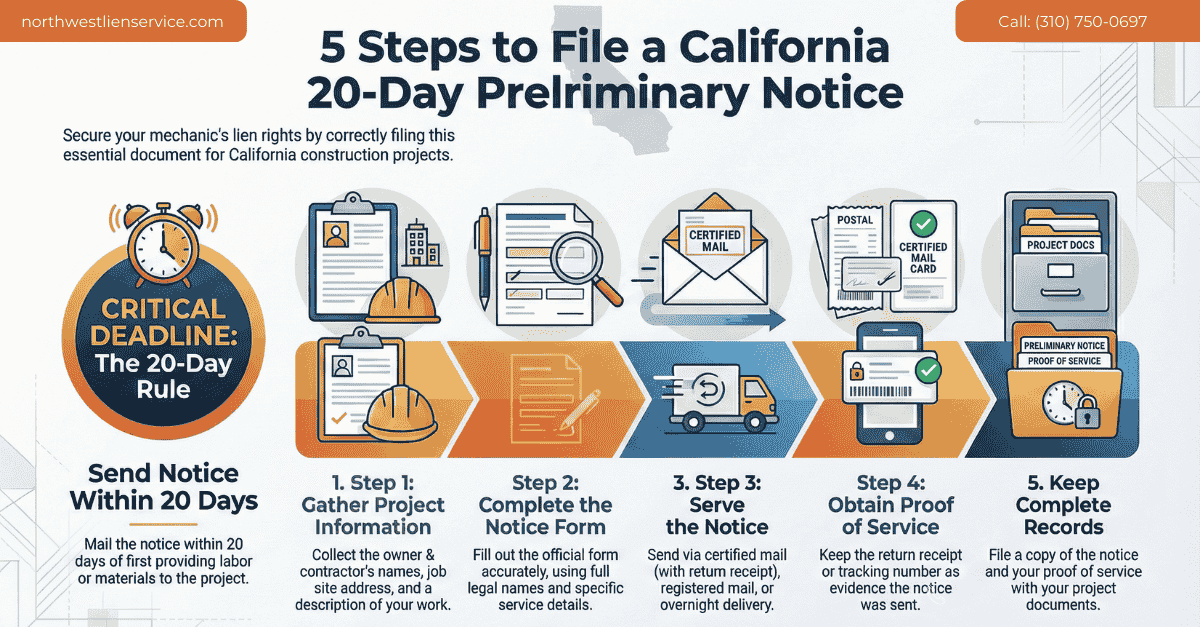
- Step 1 — Gather Information: Collect the property owner’s name, general contractor’s name, job site address, a description of your work or materials, and the name of any construction lender.
- Step 2 — Complete the Form: Fill out the Preliminary Notice form accurately and completely — no fields should be left blank. Include the required California Civil Code warning language.
- Step 3 — Serve the Notice: Deliver via certified mail, registered mail, express mail, or overnight delivery to the property owner, general contractor, and construction lender (if applicable).
- Step 4 — Obtain Proof of Service: Keep the return receipt or mailing confirmation. The deadline is met when the notice is mailed, not when it is received.
- Step 5 — Keep Records: Retain copies of the notice and all proof of service in case of a future payment dispute or lien filing.
Late Filing Warning: If you miss the 20-day window, a late notice still protects work performed in the 20 days before it was sent and all work afterward — but anything furnished earlier receives no lien protection. Direct contractors are generally exempt from notifying the owner, but must still serve a notice to the construction lender on financed projects. Read our full guide below!
Sounds overwhelming? We can help.
In this article:
- Video Guide: California 20-day Preliminary Notice in 2 Minutes
- Can you file a mechanics lien in California without a preliminary notice?
- Quick Table Reference: How to File a California 20-day Preliminary Notice
- How to file a Preliminary Notice in California: Step-by-Step Guide
- FAQs
- Questions People Ask Our Lien Experts
Video Guide: California 20-day Preliminary Notice in 2 Minutes
Learn how to send a 20-day Preliminary Notice to protect your payment rights in less than 2 minutes.
What is a 20-day preliminary notice in California?
A California 20-day preliminary notice is a required communication that informs property owners, general contractors, and construction lenders that you are providing work or materials on their project. Under California Civil Code, you generally must serve this notice if you do not have a direct contract with the property owner.
A standard notice typically includes:
- Your business information and role on the project
- A general description of the labor or materials provided
- The job site address
- The estimated total price of your work
Step-by-Step Guide: How to Send a Preliminary Notice in California
To properly prepare and mail your notice, follow these exact steps:
-
Gather necessary information: Collect the property owner’s name, general contractor’s name, job site address, and lender details.
-
Complete the preliminary notice form: Fill out all fields accurately, including the required California Civil Code warning language.
-
Serve the notice: Mail the document via certified mail, registered mail, or overnight delivery by an express service carrier.
-
Obtain proof of service: Keep your return receipt or tracking documentation.
-
Keep records: Store copies of the notice and proof of service in your project files.
.
Our Lien Filing Process
Oops! We could not locate your form.
Can you file a mechanics lien in California without a preliminary notice?
No, subcontractors and material suppliers generally cannot file a valid mechanics lien in California without first serving a preliminary notice. Serving this notice is a mandatory step to protect your payment rights on construction projects.
Parties required to send this notice include:
- Subcontractors (for contracts over $400)
- Material suppliers and equipment lessors
- Design professionals (architects, engineers, surveyors)
Read more: Can You File a Lien Without a Prelim Notice
Exception for filing California lien notice
The only major exception is for direct contractors (general contractors), who are generally not required to send a notice to the owner but must serve one to the construction lender.
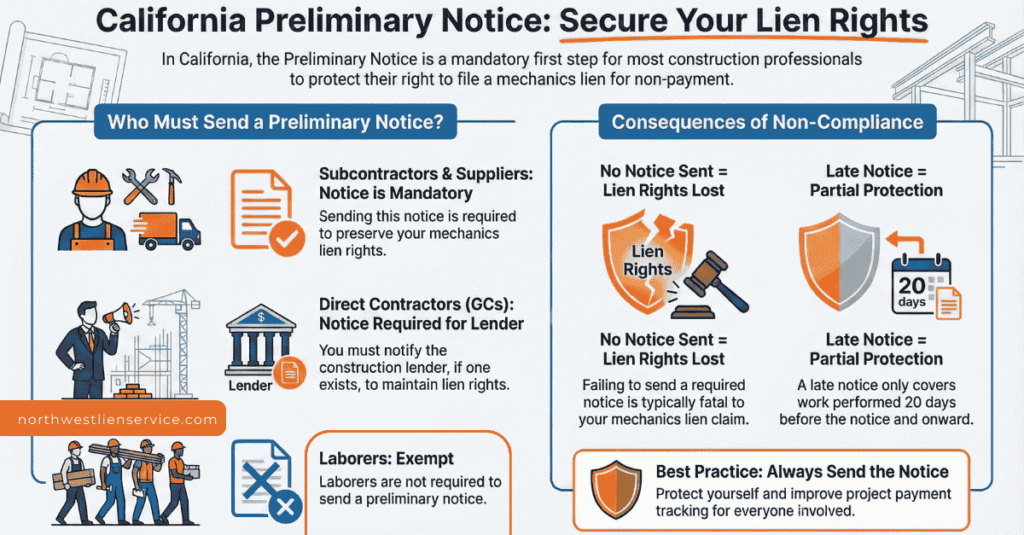
Table Reference: How to File a California 20-day Preliminary Notice
| Step | Key Details |
|---|---|
| 1. Gather Information | Collect the property owner’s name, general contractor’s name, job site address, and a description of the work/materials. |
| 2. Complete the Form | Fill out the Preliminary Notice form accurately, ensuring no fields are left blank. |
| 3. Serve the Notice | Mail the notice via certified mail with a return receipt requested to all required parties. |
| 4. Obtain Proof of Service | Keep the return receipt or other documentation as proof that the notice was sent and received. |
| 5. Keep Records | File copies of the notice and proof of service for your records in case of a future dispute. |
Common Mistakes to Avoid When Filing Preliminary Notice
Steer clear of these common mistakes when filing your preliminary notice to keep your projects running smoothly and your payments on track.
- Mistiming: Missing the 20-day deadline is probably the most common issue. As soon as you start work or deliver materials, mark the date so you know when your deadline is.
- Incomplete Information: Leaving out names, addresses, or a clear job description can lead to complications. Taking a few moments to review what you’ve written is always worth it.
- Forgetting Proof of Service: You need to keep evidence that you served the notice. Losing your return receipt or failing to get one at all can hurt your case if a problem arises.
- Not Cancelling When Needed: If your role on a project changes or you stop working before it finishes, you may need to cancel your Preliminary Notice. Ignoring this step can lead to confusion and possibly legal challenges.
What to Do After Sending Your Notice
Document Everything
- Record the date you mailed your notice along with all tracking information.
- File your proof of service with other project records.
- Document all payment terms and contractor communications related to the specific job.
Track Important Deadlines
Mark these dates on your calendar:
- First day you worked or delivered materials
- Date you mailed your preliminary notice
- Final payment due date
- Mechanics lien filing deadline (90 days from your last day on the project if payment issues occur)
Respond to Errors Quickly
If you discover incorrect or missing information in your notice, correct it immediately by sending an amended notice with accurate details. The sooner you fix errors, the better your payment protection will be.
When to Send Your Preliminary Notice
20-Day Deadline Rule
Send your preliminary notice within 20 days of first furnishing labor, materials, services, or equipment to the project. The requirement is met when the notice is mailed, not when it’s received, so proof of mailing suffices.
What Happens If You Send It Late?
Late notices still provide protection, but only for the value of labor or materials provided in the 20 days before sending the notice and anything provided afterward. Work performed before that 20-day window receives no lien protection.
Best Practice Timing
Send your preliminary 20-day notice in California as soon as you start work or even before materials are delivered. Early filing ensures compliance and eliminates the stress of tracking deadlines while juggling project demands.
How This Notice Protects Your Payment Rights
Mechanics Lien Foundation
A properly filed preliminary notice creates the legal foundation for filing a mechanics lien if you’re not paid. Without this notice, you forfeit your lien rights entirely.
Project Visibility
The notice alerts all parties to your involvement and sets clear payment expectations. It demonstrates your knowledge of California construction law and your commitment to protecting your rights.
Early Warning System
Sending notices establishes a paper trail that helps resolve payment disputes before they escalate. Property owners and general contractors take payment obligations more seriously when they know you’ve preserved your lien rights.
Why Seek Help When Filing Your California Preliminary Notices
If you’re a construction professional juggling several projects, it’s smart to seek help with California lien law compliance. Even minor mistakes can cause big headaches, so it’s important to pay close attention to every notice. Whether you’re installing fences in Riverside or wiring homes in San Jose, staying ahead of preliminary notice requirements is key. This not only prevents payment issues but also saves you from having to fix problems down the line.
How It Works: 20-Day Notice
FAQs: California 20-Day Preliminary Notice
Do I need to send a preliminary notice on every California construction project?
Yes—most parties without a direct contract with the property owner must send a preliminary notice (prelim) to preserve mechanics lien rights. This typically includes subcontractors, suppliers, and equipment rental companies. Direct contractors generally don’t send one to the owner, but may need to notify the construction lender on financed projects.
Can I still file a mechanics lien if I sent my preliminary notice late?
Yes, but the lien typically only covers work performed in the 20 days before the notice was sent and any work afterward. Work completed earlier may not be protected.
What happens if I never send a preliminary notice?
If you were required to serve one and didn’t, you can lose your right to file a mechanics lien. You may still have other options to pursue payment (like a contract claim), but the lien remedy may be off the table.
Are there any parties not required to serve a preliminary notice in California?
Some parties may be exempt depending on their role and contract relationship. Common examples include direct contractors (who generally don’t serve a notice to the owner) and individuals who only perform labor.
How long do I have to file a mechanics lien after sending a preliminary notice?
The lien deadlines depend on the project’s status and whether a Notice of Completion (or similar notice) is recorded. Because the timing rules can vary for general contractors vs. subs/suppliers, it’s best to confirm deadlines for your specific project before recording.
What is the difference between a preliminary notice and a mechanics lien?
A preliminary notice is an early project notice that helps preserve your right to file a lien later. A mechanics lien is the actual legal claim recorded against the property if you remain unpaid.
Why did I receive a California preliminary 20-day notice?
You received a California Preliminary Notice from a subcontractor, supplier, or other construction professional working on your property to inform you they have supplied labor or materials and may file a lien if unpaid, thereby preserving their legal right to payment.
How to fill out a California preliminary notice?
In general, you’ll enter your business details, the job site address, the owner/GC (and lender, if applicable), a brief description of labor/materials, and the required warning language. Talk to our California lien specialists for a sample form.
Questions People Ask Our Lien Experts
Can someone put a lien on your property without you knowing?
Yes. A mechanics lien is typically recorded with the county, and owners don’t always see it immediately unless they receive notice or check the public records. If you suspect a lien, check your county recorder’s records or ask a lien professional to confirm what was recorded.
What to do if a contractor is taking too long?
Start by requesting a written schedule update and documenting delays (texts, emails, photos). If the project keeps stalling, review your contract for milestones and notice requirements, then consider sending a formal written demand or speaking with a construction attorney.
What is the 72-hour rule in California?
In California, the term “72-hour rule” most commonly refers to final paycheck requirements for employees who quit, but in a construction context, it often refers to cancellation rights (technically “3 business days”) or notice-to-cure periods
Can a contractor file a lien without preliminary notice in California?
In California, whether a contractor can file a lien without preliminary notice depends primarily on the contractor’s relationship to the property owner and the presence of a construction lender.
California Preliminary Notice Requirements Table Summary:
| Role | Notice to Owner? | Notice to Lender? | Notice to GC? |
|---|---|---|---|
| Direct Contractor | No* | Yes | N/A |
| Subcontractor | Yes | Yes | Yes |
| Supplier | Yes | Yes | Yes |
| Wage Laborer | No | No | No |
How long is a contractor liable for his work after?
Liability depends on contract terms and the type of defect. In California, contractors are generally liable for 4 years for obvious (patent) defects and up to 10 years for hidden (latent) structural defects, regardless of what the contract warranty says.
How do I remove a lien from my property in California?
Common options include getting a signed lien release after payment, disputing an invalid lien, or using a bond/other legal process depending on the situation. Start by identifying exactly what was recorded (document name, recording date, and parties) so you can choose the right removal path.
What is the difference between temporary and preliminary notices?
“Preliminary notice” is a common term for an early notice used to preserve construction payment rights. “Temporary notice” isn’t a standard term in many lien workflows. If you see it in your documents, confirm what form or notice the sender means.
What are the three types of liens?
“Lien types” depends on context, but common categories people mean are mechanics liens (construction payment), tax liens (government), and judgment liens (court judgments). If you’re dealing with property title, the document name on the recorded lien matters more than the category label.
Can you file a lien without a lawyer?
Yes. Filing a mechanics lien in California is an administrative process that does not strictly require an attorney’s services. But lien rules are deadline-driven and form-specific, so help can reduce the risk of an invalid lien or missed deadline.
Want it done right? File with Northwest Lien. We’ve helped contractors and subcontractors since 1999.
Can someone take your house if they put a lien on it?
A lien is a claim against the property, not an immediate transfer of ownership. In some cases, a lien claimant can try to enforce the lien through a legal process, but that’s separate from simply recording the lien.
Can I run a title search myself?
Yes, you can usually search recorded documents through your county recorder’s office (online or in person). For a more complete report (and fewer missed documents), many owners use a title company or a professional title report.
Can I run a title search myself?
Yes—you can usually search recorded documents through your county recorder’s office (online or in person). For a more complete report and fewer missed documents, many owners use a title company or professional title service.
Be a Pro member and get FREE title searches.
How much does it cost to file a preliminary notice in California?
Costs vary based on how you prepare and serve it. At minimum, expect delivery/postage costs; if you use a professional service, fees can include document prep, mailing, and tracking/proof of service.
Definition of Terms
Notice of Completion California
A document recorded by a property owner to officially signal the end of a construction project. Recording this notice significantly shortens the deadline for contractors and suppliers to file a mechanics lien. Once filed, prime contractors typically have 60 days, and subcontractors/suppliers have 30 days to record their liens.
Why Trust Us
Northwest Lien Service prepares and files preliminary notices to ensure compliance with all California deadlines and requirements. We manage the paperwork while you focus on your work. Trusted lien service since 1999.
“NW Lien has helped out our HVAC company with several claims and they have all ended with us getting paid. Their customer service is great, informative and they have made the process very easy. Highly recommend working with them.” – Samantha Peart, Verified Customer
Disclaimer: This article is for informational purposes only and does not constitute legal advice. Mechanics lien laws are complex and vary by jurisdiction. For specific legal guidance regarding your situation, please consult with a qualified attorney licensed in California.